12:29 - 26.11.2025
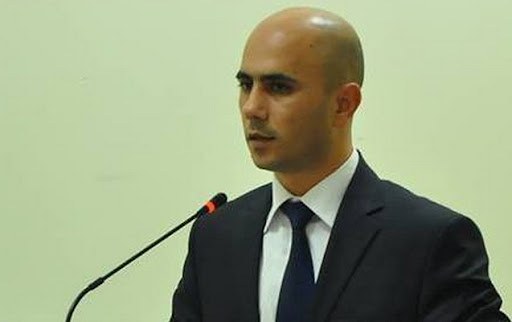
November 26, Fineko/abc.az. Since the beginning of January, the limit of 200,000 manats for simplified tax payers will be doubled up to 400,000 manats. At that, taxpayer's turnover, formed on the basis of payments made through a POS terminal in non-cash manner for retail trade and services rendered to persons who are not registered by the tax authority, will be taken into account using coefficient 0.5. Although many entrepreneurs were pleased with the decision, some of them did not fully understand the essence of the issue. In this regard, we applied to expert economist Rashad Hasanov.
The expert informed ABC.AZ that of course, the government is most likely thinking about the relevant aspects of simplified taxation. He added that it is necessary to take into account that under the current conditions the government is trying to neutralize the risks of fiscal stability, in one way or another compensating for the decrease in oil revenues at the expense of the non-market economy and continuing this policy: "Because if we look at the strategic and medium-term spending framework until 2029, we will see that the government itself predicts oil revenues in the budget by 5 bn manats. If in 2026 this figure will be 18 billion manats, then in 2029 it will fall to 13 billion manats. In return, it provides for an increase in expenses by 2 billion manats. That is, the projected budget for 2026, which currently stands at 41.7 billion manats, is projected at 43.8 billion manats in 2029, and under these conditions, policy of compensating the difference is followed in one way or another from various sources. One of them is the method of taxation of wage income."
The expert believes that the government is now facing a choice.
"But I think that first of all steps should have been taken in the appropriate direction. Until now, it would be possible to start the corresponding process after obtaining broader, fundamental results in this direction.
In other cases, for example, a reverse move would be possible. Of course, there have been similar approaches in practice.
It is possible that if the trends towards expansion of the formal labor market are under threat, the government will most likely abandon this policy at this time and turn back to supportive and stimulating mechanisms, or may decide to reduce the overall burden, which is one of the areas of expenditure that form the main burden on the wage fund - obligations within compulsory state social insurance. As for the issue of simplified taxation, I do not think that this will lead to serious consequences in the short term, since there is a requirement for non-cash turnover. However, recent trends in the economy as a whole have created certain challenges towards cashless turnover, and small businesses are already facing these challenges. No matter how much they resist, they are forced to carry out a certain part of the turnover in non-cash form in their business activities. But as a whole, I don't expect serious consequences in the short term.
And in the medium term, in an economic environment where non-cash turnover is already widespread, of course, raising the limit on simplified tax liability will somehow "untie the hands" of small and microenterprises and lead to the formation of a relatively more favorable environment for tax administration. At that, I think that even such an approach can stimulate informal entrepreneurial activity to one degree or another.
As we have already said, in the medium and long term, an entrepreneur who has not faced the problem of exceeding the 200,000 limit may in one way or another encourage non-cash payments, as well as (in one form or another) informal entrepreneurial activity," Hasanov said.
By Elmir Murad






28 August 2026
28 August 2026
28 August 2026
28 August 2026
28 August 2026
28 August 2026
28 August 2026
28 August 2026
26 August 2026
26 August 2026