11:08 - 21.10.2026
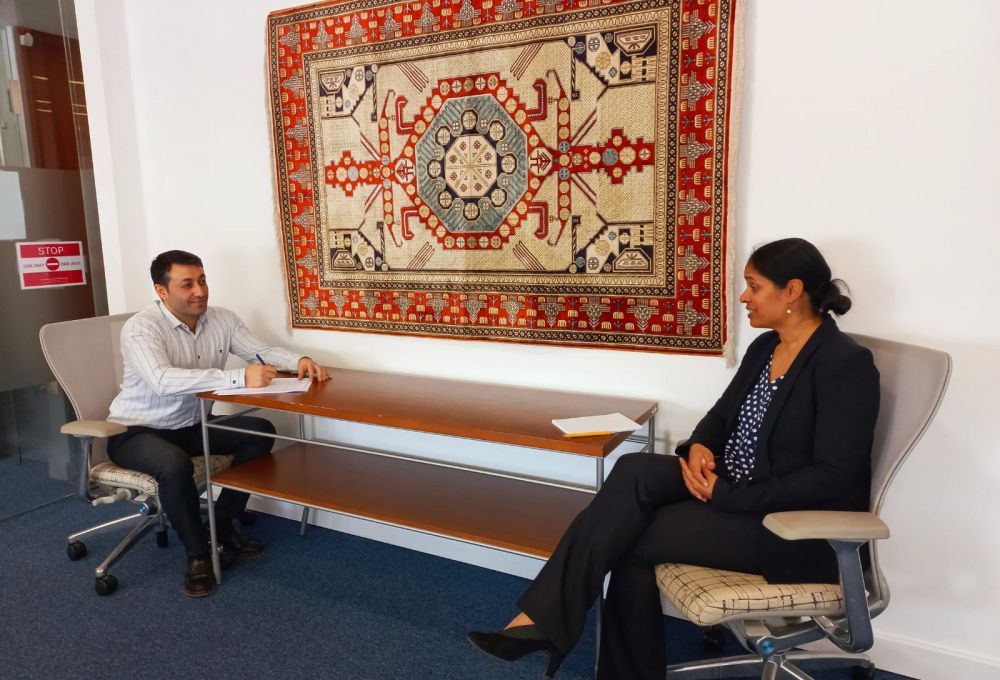
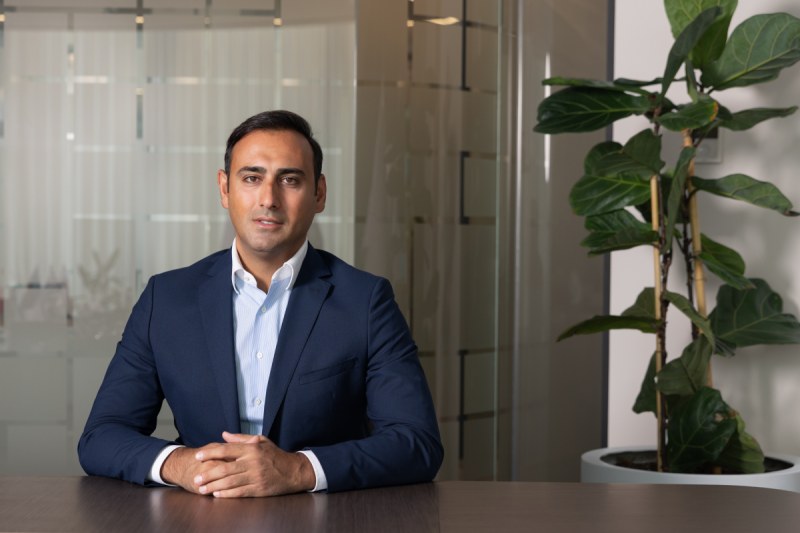
An interview with Bakhtiyar Rasulov, Director of the Micro Business Department at Kapital Bank
Microentrepreneurship is one of the key drivers of economic growth. For entrepreneurs operating in this segment, timely access to financing, flexible service and solutions tailored to their business needs are particularly important. Digitalisation and artificial intelligence are transforming the way banks work with microentrepreneurs, making financial services faster and more accessible.
In recent years, Kapital Bank has been transforming its microcredit model to simplify entrepreneurs’ access to financing and adapt lending processes to the pace of their day-to-day business activities.
How has access to financing for microentrepreneurs changed in recent years? How is technology reshaping the relationship between banks and entrepreneurs, and what will determine competition in the future? We discussed these questions with Bakhtiyar Rasulov, Director of the Micro Business Department at Kapital Bank.
- Mr Rasulov, microentrepreneurship is undergoing a period of rapid transformation both in Azerbaijan and globally. Against this backdrop, let us begin with an overview of the market. How has access to financing for microentrepreneurs in Azerbaijan changed in recent years?
Microentrepreneurship is indeed an important part of the national economy, and access to financing plays a significant role in business development. For a long time, however, obtaining a loan was a time-consuming process for microentrepreneurs, involving considerable paperwork. Under the traditional model, entrepreneurs had to visit a bank branch, submit documents and arrange a guarantor or other forms of collateral.
In recent years, this approach has begun to change. Around four years ago, we also embarked on a transformation of our microcredit model. Our goal was to make financing simpler and faster to access and to adapt the lending process to the pace of entrepreneurs’ everyday business activities.
Today, Kapital Bank serves more than 100,000 microcredit customers, and our loan portfolio stands at approximately AZN 660 million. These figures reflect the scale of the transformation we have undertaken in microcredit lending.
- Mr Rasulov, as you mentioned, microcredit lending for many years relied heavily on branch visits, paperwork, guarantors and lengthy approval processes. What changes became necessary as the needs of microentrepreneurs evolved, and what has Kapital Bank changed in its lending model?
Under the traditional model, there is a significant gap between the pace at which microentrepreneurs operate and the speed of the lending process. Entrepreneurs manage cash flow, purchase inventory and make decisions every day. Sometimes, a need for financing arises unexpectedly, with funds required on the very same day. In such circumstances, a lending process that takes several days cannot meet an entrepreneur’s needs.
That is precisely why, around four years ago, we began a major transformation of our microcredit model and became the first in Azerbaijan to introduce an innovative approach in this area. Our goal was not simply to move existing processes online, but to fundamentally change how microentrepreneurs access financing. We wanted to provide our customers with a faster, more convenient and more accessible borrowing experience.
Today, we issue approximately 13,000 loans per month. Taking working days and business hours into account, this translates into an average of at least one loan per minute. However, this does not mean that microentrepreneurs can obtain loans from us only during business hours. On the contrary, they can apply for a loan 24 hours a day, seven days a week. All they need is the Birbank mobile app.
Digitalisation is at the heart of this model. Approximately 90% of our loan sales are conducted through digital channels. Once the information relating to a customer’s business has been verified, around 95% of credit decisions are made fully automatically. We have also digitised a significant proportion of the processes at our branches. For example, documents are signed digitally through SİMA rather than on paper.
Entrepreneurs have four main channels through which to access our lending products: bank branches, remote sales (Telesales), the Birbank app and the Birbank Biznes app. Through Telesales, an entrepreneur can obtain a loan entirely online in no more than 10–15 minutes. Through Birbank or Birbank Biznes, a loan can be arranged fully online, without any human intervention, in most cases within approximately five minutes. We currently offer both loans and credit cards entirely online through these channels. More than 30,000 entrepreneurs have already used our credit card products to meet their short-term liquidity needs.
Ultimately, this is about much more than digitising the lending process. Our main objective is to change the way microentrepreneurs access financing. Entrepreneurs no longer have to adapt to banking processes; instead, banking adapts to the pace at which they operate.
We can also see the results of these changes in customer satisfaction. NPS (Net Promoter Score) is one of our key strategic indicators, and we attach considerable importance to it. Following the transformation, our NPS among microbusiness customers rose to 55.5%. Our goal is to improve this indicator further by taking customer feedback into account.
- What technological infrastructure underpins such fast and automated credit decisions?
We use integrations with government authorities, our internal databases and various other data sources to access information in real time, with our customers’ consent, of course. We analyse entrepreneurs’ credit histories, transactions and financial behaviour. In other words, our decisions are based not only on the information provided when an application is submitted, but also on the broader picture of each entrepreneur’s business activity.
As one of the country’s largest banks, we work with a very extensive base of entrepreneurs. We closely monitor the behaviour, needs and changing circumstances of business owners operating across different sectors. This allows us to better understand both individual customers and the broader developments taking place across the entrepreneurial segment.
Using these data, we have designed our decision-making processes to be as fast and automated as possible. Technology, therefore, is not merely a tool for accelerating processes. It is one of the key instruments that enables us to understand entrepreneurs better and make more appropriate decisions for them.
These capabilities are available not only to our existing customers. Entrepreneurs who do not yet have an account with our bank can also open one entirely online and access our lending products.
- Does a one-size-fits-all approach still work in microentrepreneurship, or is banking increasingly moving towards personalised solutions?
I believe that the approach of offering the same product to every microentrepreneur is becoming a thing of the past. Entrepreneurs operate in different sectors, their businesses have different characteristics, and their needs vary accordingly. As a result, personalisation is becoming increasingly important in banking.
We have already taken our first steps in this direction. For example, when communicating with customers, we take into account their industry and business segment and use this information to develop and send tailored offers through push notifications and SMS messages.
Our goal is not to send everyone the same loan offer. We want customers to feel that the offer they receive is relevant to their business and addresses their specific needs.
For example, if we can identify the goods an entrepreneur typically purchases ahead of a particular season, we can offer financing tailored to that need rather than sending a generic loan offer.
For us, personalisation begins with identifying specific customer needs. At the same time, it is important to note that we are still at an early stage of this journey and are testing different approaches.
Ultimately, our ambition goes beyond sending customers different messages. We aim to build a banking model in which we understand each entrepreneur’s business and needs more deeply and offer products and lending terms tailored accordingly.
- Speaking about the future of banking, artificial intelligence has already become part of everyday reality in the banking sector. Where do you think AI will have the greatest impact on microentrepreneurship?
We are already using AI-powered solutions in sales. One of the main areas of application is communication with entrepreneurs and presenting them with loan offers. In particular, we are currently piloting a solution called “AI Sales Agent”.
Under this model, the first interaction with a customer is handled not by a human employee, but by artificial intelligence. Customers are informed about this in advance, after which the AI agent contacts entrepreneurs directly, proactively presents loan offers, answers their questions and seeks to understand why they may not be interested in an offer. For example, an entrepreneur may not need a loan at that particular time, the proposed amount may not be suitable, or they may require a different product. Based on this information, the “AI agent” can suggest an alternative solution.
In addition, the “AI Assistant” integrated into the Birbank app enables retail customers and microentrepreneurs alike to get answers to questions about banking services, ranging from ordering a new card and applying for a loan to making transfers and opening deposits.
Users can check their card balances and recent transactions, track card refund processes, find branch addresses and opening hours, explore financial offers tailored to their needs, and carry out a range of transactions directly through the app.
I believe the impact of artificial intelligence on microbanking will extend far beyond these applications. In the future, we plan to develop AI-driven lending models. We will work on using AI to support credit decision-making, analyse customer behaviour and generate the most suitable offers for entrepreneurs.
The objective is not simply to automate the sales process. AI can help us understand entrepreneurs’ behaviour more effectively, identify their needs more accurately and offer the right solutions at the right time. In my view, this is where the most significant changes in microbanking will take place.
- What observations about entrepreneurs have surprised or motivated you the most? What turning points do you see in the stories of those receiving their first business loan?
What impresses me most about microentrepreneurs is their agility and ability to adapt quickly to changing circumstances. They often operate with limited resources, yet respond to market changes remarkably quickly.
We also have tangible results in this segment that motivate us. More than 50,000 individual entrepreneurs have received their first business loan through Birbank Biznes. The total value of these loans amounts to AZN 300 million. Behind these figures are entrepreneurs, each with their own business story.
What is even more interesting is that we can follow some of these stories over time. Thousands of entrepreneurs who belonged to the microbusiness segment before obtaining a loan through Birbank or Birbank Biznes have subsequently increased their turnover and progressed into the small or medium-sized business segment.
I believe the real turning point is not the loan itself, but the difference that financing makes to an entrepreneur’s business. Some purchase new equipment, others expand their operations, while others increase their turnover. What motivates us most is seeing a business that started on a small scale gradually grow, with our support playing a part in that journey.
- What will entrepreneurs in Azerbaijan expect from their banks five years from now? Which factors do you think will determine competition in the microbanking market during that period?
I believe that banking for microentrepreneurs in Azerbaijan will continue to evolve in line with global trends. In the coming years, entrepreneurs will look beyond the availability of financial products. They will expect banks to understand their businesses, identify their needs accurately and provide suitable solutions quickly. Data, artificial intelligence and digital solutions will play a key role in this process.
We are already seeing the early signs of these changes in the market. Today, we serve more than 100,000 microentrepreneurs. This scale enables us to gain deeper insights into changing customer behaviour and needs, as well as to better understand developments across the market.
For us, this represents not just a number or a market indicator, but also a significant responsibility. In the years ahead, our key task will be to use this experience to create more relevant and valuable banking solutions for entrepreneurs.
In this regard, increasing our market share and growing our loan portfolio are among our key strategic priorities. Our first priority is to expand our reach and serve more entrepreneurs. Furthermore, according to our market research, we currently rank first in the market by the number of loans issued. In the next strategic period, we aim to increase our loan portfolio to AZN 1 billion.
All these efforts serve one important strategic objective. We do not want to be merely an institution that meets entrepreneurs’ financial needs. Our ambition is to become a trusted partner that stands by them, supports their personal development and helps their businesses grow.


21 October 2026
21 October 2026
21 October 2026
21 October 2026
21 October 2026
21 October 2026
19 October 2026
19 October 2026
19 October 2026
19 October 2026
19 October 2026
19 October 2026
19 October 2026
19 October 2026
19 October 2026